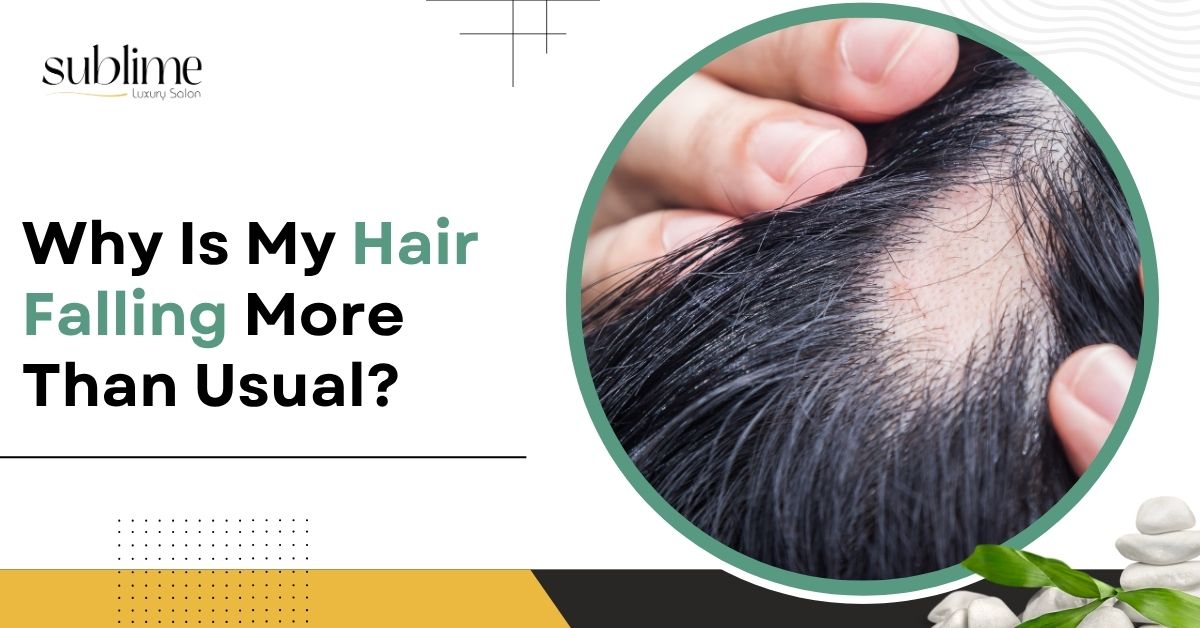
Some hair fall is completely normal — most people naturally shed anywhere between 50 to 100 strands a day. But when it starts feeling like noticeably more than that, it’s worth understanding what’s actually going on before assuming the worst.
Here’s a simple breakdown of common causes, and what genuinely helps.
Stress Is More Connected Than You’d Think
One of the most common, and most underestimated, causes of increased hair fall is stress. When your body goes through a period of high stress — emotional, physical, or even from illness — hair follicles can shift into a resting phase earlier than usual, leading to noticeable shedding a few months later. This delayed timing is often why people don’t immediately connect their hair fall to a stressful period from a couple of months back.
Your Diet Plays a Bigger Role Than Your Shampoo
It’s easy to blame hair fall on a shampoo or hair product, but diet often plays a much bigger role. Hair needs adequate protein, iron, and key vitamins (like biotin and vitamin D) to grow properly. A diet lacking in these, even temporarily, can show up as thinning or increased shedding. If your hair fall has been ongoing for a while, it’s worth looking at your overall diet, not just your hair care routine.
Over-Styling and Heat Damage Add Up
Frequent heat styling, tight hairstyles, and harsh chemical treatments can weaken hair over time, making it more prone to breakage that can look like hair fall even when it’s not coming from the root. If you’re regularly straightening, curling, or tying your hair tightly, giving it more breaks between treatments can make a real difference.
Hormonal Changes Are a Common, Natural Cause
Hormonal shifts — from pregnancy, thyroid changes, or other natural life transitions — can temporarily increase hair fall. This is usually not something to panic about, but it is worth having checked, especially if the shedding is sudden or significant, so you can understand what’s actually causing it.
Scalp Health Is Often Overlooked
A neglected or unhealthy scalp can contribute to hair fall just as much as any of the reasons above. Product buildup, dryness, or an irritated scalp can weaken the environment hair needs to grow properly. Regular scalp care — through gentle cleansing, scalp massages, and treatments designed for scalp health — is one of the most overlooked ways to support healthier hair growth.
What Actually Helps
- A hair spa treatment with a scalp-focused massage improves circulation and can support a healthier scalp environment for growth.
- Reducing heat styling frequency, even slightly, reduces cumulative damage.
- A more balanced diet, with attention to protein and key vitamins.
- Managing stress, even in small, consistent ways — this is often the hardest cause to address, but also one of the most impactful.
- Getting a professional opinion if the hair fall is sudden, patchy, or ongoing for more than a few weeks, since this can point to something worth checking with a doctor as well.
When to Actually Be Concerned
A little extra shedding during a stressful week or season change is normal and usually resolves on its own. What’s worth paying closer attention to is hair fall that’s sudden, comes in patches, or continues steadily for several weeks without improvement — these are signs worth discussing with a professional rather than waiting it out.
Final Thought
Hair fall usually isn’t caused by just one thing — it’s often a combination of stress, diet, styling habits, and scalp health working together. Identifying which of these applies to you makes it a lot easier to actually address the cause, rather than just treating the symptom with another product change.