If you’ve walked into any salon in the last few years asking for smoother, frizz-free hair, chances are you’ve been offered two options: keratin treatment or hair botox. Both promise shinier, softer, more manageable hair. Both come with a similar price tag. And both sound impressive enough that most people just pick whichever one the stylist recommends that day, without really understanding the difference.
Here’s the thing — these two treatments work very differently, are suited to different hair concerns, and one of them is genuinely better for damaged hair while the other is better if straightness is your main goal. Neither is universally “better.” The right one depends entirely on what your hair actually needs, which is something a proper hair and scalp assessment can tell you far more reliably than a quick in-salon recommendation.
Let’s break down what each treatment actually does before deciding which one fits you.
What Is a Keratin Treatment?
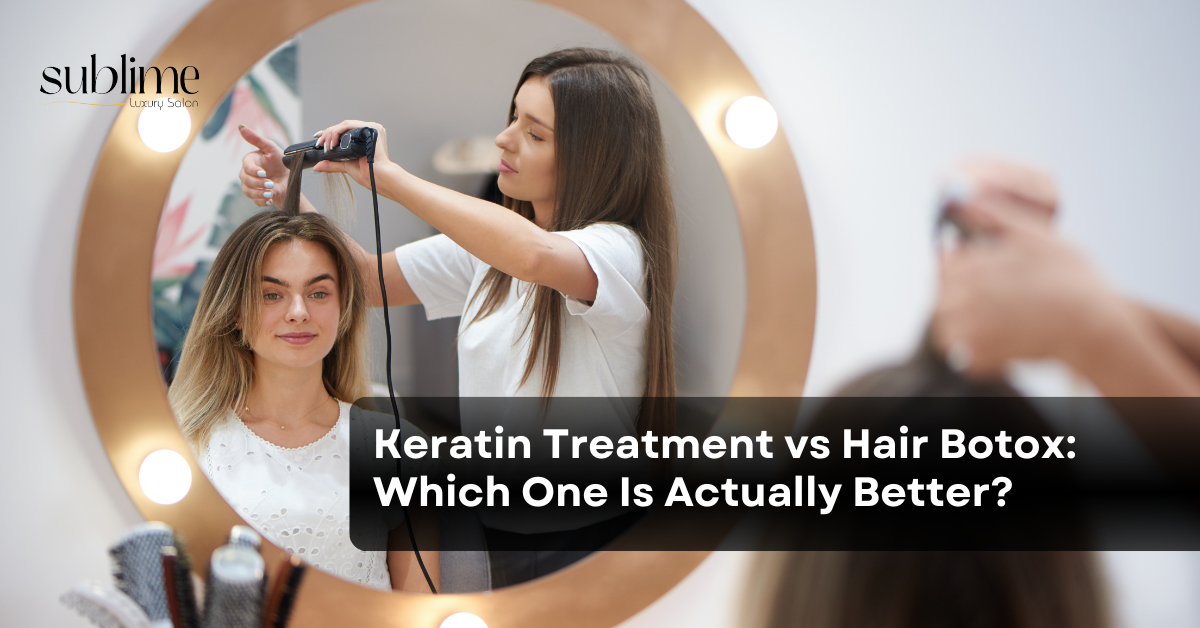
Keratin treatment involves applying a keratin-based formula to your hair and then sealing it in with heat, usually through flat-ironing. Keratin is a protein that your hair is naturally made of, so the treatment essentially replenishes lost protein, smoothing the hair cuticle and reducing frizz.
The results tend to relax curls and waves, add noticeable shine, and make hair significantly easier to manage day-to-day, especially in humid weather. Depending on the formula and your hair type, keratin treatments typically last two to five months before they start fading.
Most keratin formulas do contain some level of formaldehyde or formaldehyde-releasing agents, which is what allows the treatment to bond so effectively with heat. This is worth knowing if you have any sensitivity to that ingredient or health concerns, since ventilation and formula quality matter more with keratin than with most other hair treatments.
What Is Hair Botox?
Despite the name, hair botox has nothing to do with actual botulinum toxin. It’s a marketing term for a deep conditioning treatment that fills damaged strands with a mix of proteins, vitamins, amino acids, and collagen. Unlike keratin treatment, hair botox doesn’t chemically alter your hair structure or affect how curly or straight it appears. Instead, it’s about repair.
Hair botox works by coating each strand and filling in the microscopic gaps caused by damage from heat styling, coloring, or environmental stress. The result is smoother, shinier, noticeably healthier-looking hair, without a dramatic change in texture. Most formulas don’t contain formaldehyde, which makes it a gentler option for people who are cautious about harsh chemicals.
The Core Difference: Smoothing vs Repair
This is really the heart of the comparison. Keratin treatment is a smoothing and straightening treatment first, with some conditioning benefit as a side effect. Hair botox is a deep repair and conditioning treatment first, with a smoothing effect as a side benefit.
If your biggest concern is frizz, waviness, or wanting straighter, sleeker hair, keratin will get you there more effectively. If your biggest concern is damage — from heat tools, chemical coloring, sun exposure, or just years of styling wear and tear — hair botox addresses the actual problem rather than just managing the symptom.
Keratin Treatment vs Hair Botox: Side-by-Side Comparison
Primary purpose: Keratin smooths and reduces frizz through a chemical bond; hair botox repairs and conditions damaged strands.
Effect on texture: Keratin noticeably relaxes curls and waves; hair botox leaves natural texture mostly intact.
Chemical content: Keratin often contains formaldehyde or releasers; hair botox is generally formaldehyde-free.
Best for: Keratin suits frizzy, curly, or unmanageable hair; hair botox suits dry, damaged, or over-processed hair.
Longevity: Keratin typically lasts two to five months; hair botox usually lasts two to three months.
Maintenance: Keratin requires sulfate-free shampoo and no washing for the first few days; hair botox has fewer restrictions and is easier to maintain.
Suitability for colored hair: Both are generally safe, but hair botox is often considered gentler on color-treated hair.
Which One Should You Actually Choose?
If your hair is naturally frizzy or wavy and your main goal is smoother, straighter-looking hair for the next few months, keratin treatment is the more effective choice. It directly targets frizz and unruliness in a way hair botox isn’t designed to do.
If your hair feels dry, brittle, or damaged — especially from repeated heat styling, chemical treatments, or coloring — hair botox is the better option. It won’t give you pin-straight hair, but it will genuinely improve hair health, shine, and softness without adding harsh chemicals to already-stressed strands.
There’s also a middle scenario worth mentioning: if your hair is both frizzy and damaged, doing hair botox first to repair the strands, followed by a milder keratin treatment later, tends to give better long-term results than jumping straight into an aggressive smoothing treatment on already-weak hair.
Why a Generic Recommendation Isn’t Always Right for You
Here’s where most people go wrong with this decision — they ask for a recommendation without anyone actually assessing their scalp and hair condition first. Both treatments involve heat and chemical exposure to some degree, and using the wrong one on already-compromised hair can worsen damage rather than fix it.
For example, someone with a sensitized scalp, active hair fall, or a scalp condition like dermatitis or fungal infection shouldn’t be jumping into either treatment without addressing the underlying issue first. Similarly, if hair fall is the actual concern rather than frizz or dullness, neither keratin nor hair botox solves that — that requires an entirely different, more targeted approach like a proper hair fall assessment or PRP-based treatment.
When to See a Specialist Instead of Just Booking a Salon Treatment
Salon treatments like keratin and hair botox are great for cosmetic smoothing and shine, but they aren’t designed to diagnose or treat underlying scalp or hair health issues. If you’re noticing any of the following, it’s worth getting a proper scalp and hair assessment before committing to either treatment:
Persistent hair fall that doesn’t seem to be slowing down, a scalp that’s frequently itchy, flaky, or irritated, hair that feels damaged no matter what products you use, or thinning that’s noticeable at the parting or hairline. These are signs of an underlying issue that a smoothing or conditioning treatment simply won’t fix, and continuing to layer cosmetic treatments on top of an unaddressed problem usually makes things harder to reverse later.
At Sublime, we typically start with a scalp and hair diagnosis before recommending any treatment path, because frizz, dullness, and hair fall often look similar on the surface but come from completely different causes. Sometimes what looks like “damaged hair that needs botox” is actually early-stage hair thinning that needs a very different kind of attention, like PRP therapy or a targeted hair fall treatment plan.
Final Thoughts
Keratin treatment and hair botox aren’t competing for the same job, even though they get lumped together constantly. Keratin is your answer for frizz and unmanageable texture. Hair botox is your answer for damage and dryness. Choosing based on what your hair actually needs — rather than what sounds more premium — is what determines whether you leave the salon happy in the mirror or disappointed a few weeks later.
And if your hair concerns go beyond frizz or dullness — persistent hair fall, scalp issues, or thinning that a salon treatment won’t fix — that’s the point where it’s worth moving from a salon chair to a proper dermatological consultation. If you’re in Mohali, Panchkula, or the tricity area and want an honest assessment of what your hair and scalp actually need, our team at Sublime can help you figure out the right next step.
Frequently Asked Questions
Can I do keratin treatment and hair botox together? Not usually in the same sitting, since they work differently and layering both at once can overload the hair. Many people alternate — hair botox to repair, followed later by a milder keratin session if smoothing is still needed.
Which one is safer for frequently colored hair? Hair botox is generally considered gentler on color-treated hair since it focuses on conditioning rather than chemically altering the hair structure. Keratin can still be done on colored hair, but it’s worth spacing it out properly from your last coloring session.
Does hair botox actually straighten hair like keratin does? No. Hair botox improves smoothness and manageability through deep conditioning, but it doesn’t chemically relax curls or waves the way keratin treatment does.
How do I know if my hair needs repair or smoothing? If your hair feels rough, brittle, or breaks easily, that points to damage, which hair botox addresses. If your hair is naturally frizzy or wavy but not necessarily damaged, that’s more of a smoothing concern, which keratin handles better.
Is it bad to keep doing keratin treatments every few months? Repeated keratin treatments, especially formulas with formaldehyde-releasing agents, can accumulate stress on the hair and scalp over time. If you’re relying on it every couple of months, it’s worth getting your scalp and hair health checked to make sure the underlying condition isn’t being masked rather than actually improved.