Have you ever loved a hair colour on someone else, then felt a little let down when you tried it yourself? It happens to almost everyone. The colour is usually not the problem. What matters is how the shade, your skin and your natural hair come together.
This guide walks you through it gently, step by step, so you can choose a hair colour for your Indian skin tone with more confidence.
Quick answer: The best hair colour for Indian skin tone is one that suits your undertone, not only how light or deep your skin looks. Warm browns like caramel, chestnut and golden brown flatter many Indian complexions. Burgundy, mahogany and copper can look lovely on wheatish to dusky skin. Lighter ash shades and blondes can work too, but they usually need lightening first (darker ash-brown shades may need less), so it helps to plan for time, budget and aftercare.
A few things to remember
- Skin depth helps you understand how much contrast a shade may create, while undertone helps you choose the colour direction.
- You can check your undertone at home with a simple jewellery test and a mirror in daylight.
- Naturally black or dark brown hair shows deep shades easily. Caramel, honey, light ash and blonde shades usually need lightening.
- A patch test and a short consultation before a big change are always a good idea.
Why the same shade looks different on different people
Two things shape how a colour sits against your face.
Skin depth describes how light or deep your complexion appears. Undertone describes the soft colour beneath the surface: warm (golden, peachy, olive), cool (pink, rosy, bluish) or neutral (a mix of both).
Words like fair, medium/wheatish and deep/dusky are commonly used in everyday talk, but they are only starting points. Your skin is more personal than any label.
Indian skin covers a very wide range of depths, and undertones often lean warm or neutral. Cool undertones exist too. So two people with wheatish skin can need two different browns, and that is completely normal.
Simple ways to find your undertone at home
Try all four and see what pattern you notice.
- Jewellery test. If gold suits you more, you may be warm. If silver does, you may be cool. If both look nice, you may be neutral.
- Mirror test in daylight. Sit near a window with a bare face. Golden, peachy or yellow hints point to warm. Pink, red or bluish hints point to cool.
- Fabric test. Hold a pure white cloth and a cream one near your face. If white brightens you, you may be cool. If cream suits you better, you may be warm.
- Wrist veins. Greenish veins lean warm, and bluish or purple veins lean cool. This helps some people and confuses others, so treat it as one small clue.
If the tests give mixed results, you may have a neutral or olive-leaning undertone. A stylist can help you check your undertone in natural light.
Shade ideas by skin depth
Think of this table as a gentle starting point, not a rule.
| Skin depth | Shades that usually work | Bolder options | Go slowly with |
| Fair | Chestnut, golden brown, caramel highlights, honey tones | Copper, soft burgundy, plum-brown | Flat jet black can look heavy |
| Wheatish / medium | Caramel, mocha, golden brown, chocolate, chestnut | Burgundy, mahogany, copper | Very ash or silvery shades can look grey on warm skin |
| Dusky / deep | Espresso, dark chocolate, mahogany, deep burgundy, auburn | Wine, bronze, fine caramel highlights | Very pale blondes create strong contrast and need a lot of upkeep |
Fair skin
You have the widest choice, but warmth still matters. If your skin is golden, chestnut, golden brown and caramel highlights add softness. If it leans pink, ash brown, cool burgundy or plum-brown can keep redness from standing out. If you love copper, try one shade deeper first.
Wheatish or medium skin
This depth is often the most flexible. Caramel, mocha and golden brown look natural, and honey tones lift the face without a harsh line. Burgundy and mahogany look rich in sunlight. Strongly ash shades can look dull on warm skin, so ask a stylist to balance them.
Dusky or deep skin
Rich, deep shades usually look beautiful: espresso, dark chocolate, mahogany and deep burgundy. Fine caramel or bronze highlights add glow without a stark line. If you love a lighter shade, try it in face-framing sections instead of the whole head. A very pale blonde on deep skin is dramatic, needs the most lightening and takes the most upkeep.
Pick a direction by undertone
- Warm undertone: caramel, golden brown, honey, copper, chestnut.
- Cool undertone: ash brown, cool burgundy, plum-brown, deep blue-black.
- Neutral undertone: most of the above, so you can choose by how much upkeep you want.
A gentle note about dark hair
A lot of Indian hair is naturally black or dark brown, which changes how colour develops. Deep shades such as dark brown, burgundy and mahogany can show on dark hair without lightening, usually as a rich shine in sunlight. Lighter shades such as caramel, honey and light ash usually appear only after the hair is lightened, while darker ash-brown shades may need less lightening.
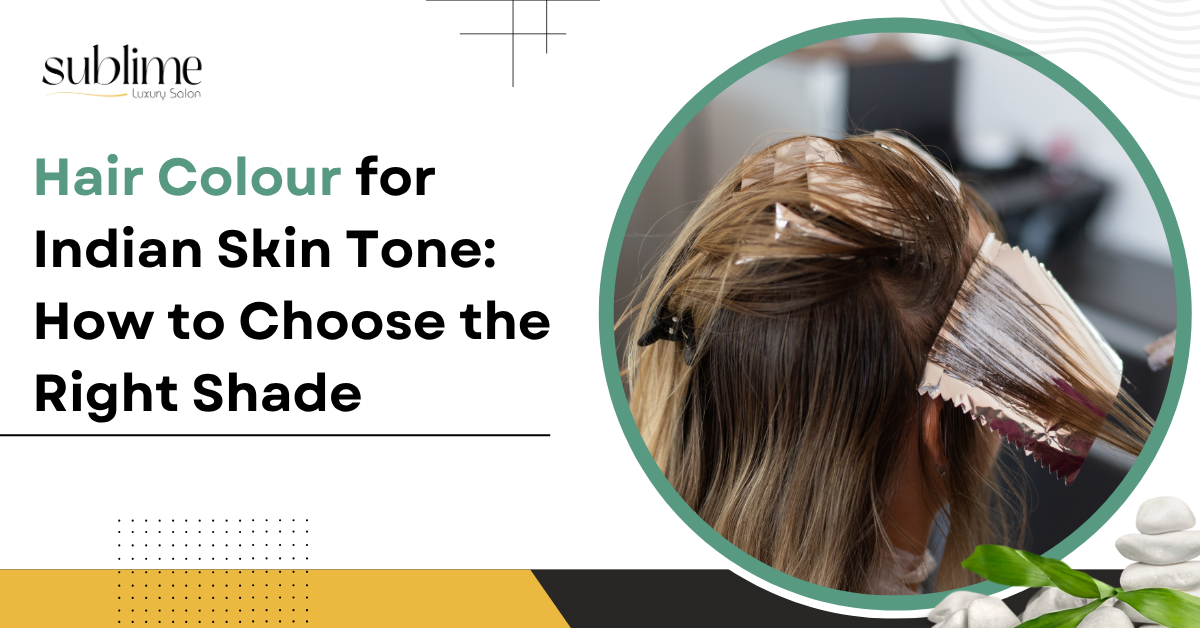
When dark hair is lightened, warm red-orange tones show up first. A toner is then used to soften that warmth. Toner fades with time, which is why colour can start to look brassy. Here is what that means for you:
- Time: a big jump from black to light brown or blonde may take more than one visit.
- Cost: lightening and toning add steps, and upkeep adds visits.
- Hair care: the lighter you go, the more care your hair needs.
If your hair already feels dry or rough, give it some love first. Our guide on signs your hair needs a hair spa can help you tell, and why hair falls more than usual is worth a read before you lighten.
Colouring styles at a glance
| Style | Lovely for | Upkeep |
| Global colour | One even shade, grey coverage, a deep rich look | Roots show as they grow, so touch-ups roughly every 6 to 8 weeks |
| Highlights | Adding dimension to dark hair | Grow out more softly than global colour |
| Balayage or ombre (hand-painted) | A sun-kissed, easy grow-out | Often allows a softer grow-out and fewer touch-ups than global colour |
| Fashion shades (burgundy, plum, wine) | A soft hint of colour on dark hair, or a bold look | Fade faster and need colour-safe care |
Your stylist can tell you which of these suits your hair length and condition. At Sublime, highlights and global colouring are listed under hair colouring services.
Hair colour for Indian men
The same ideas apply to men. Natural-looking dark brown, soft brown highlights and deep burgundy tones suit many Indian men and still look neat and professional. If you only want to cover greys, ask for a shade close to your natural colour, so the grow-out stays subtle.
A few more things to think about
- Grey coverage: shades close to your natural colour blend more easily as roots grow.
- Hair texture: curly and wavy hair can look richer in person than in photos, so a shade that looks flat online may surprise you in a good way.
- Lifestyle: sun, chlorine and heat styling fade colour faster, and light shades show fading more.
- Occasions: if a wedding is coming up, finalise your shade well before the day. Our bridal makeup trial guide and pre-wedding beauty checklist can help with timing.
- Face shape: colour and cut work together, so see how to choose a haircut for your face shape.
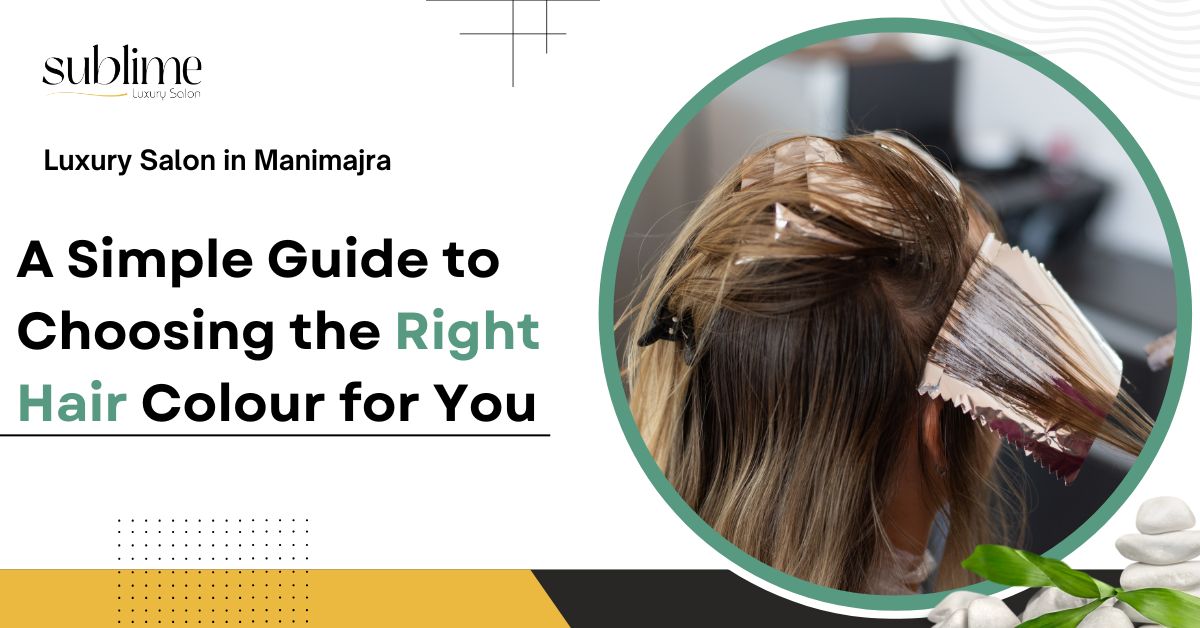
For the basics of choosing colour by lifestyle and upkeep, our simple guide to choosing the right hair colour is a good companion read.
Is hair colour safe? A word on patch tests
Most people colour their hair without any trouble. Still, allergic reactions to hair dye can happen, and the most studied trigger is an ingredient called PPD. In a large North American dermatology study of 54,917 patients patch-tested over 24 years, 5.6% had an allergic patch-test reaction to PPD, and hair dye was the most common source. Those were patients who were patch-tested, not the general population, so this does not mean 1 in 18 people will react.
It is simply a kind reminder to ask for a patch test, especially if you have ever felt itching, redness or swelling after colouring. Another clinical study of patients with confirmed hair dye allergy looked at how reactions relate to dye exposure, so follow your stylist’s timings and never leave colour on longer than advised.
If you develop itching, redness, swelling or another reaction after colouring, stop using the product and seek medical advice.
Small mistakes that are easy to avoid
- Choosing a shade from a photo taken in different lighting.
- Looking only at skin depth and forgetting undertone.
- Going many shades lighter in one go on dry or damaged hair.
- Skipping toner or colour-safe care, then blaming the shade when it turns brassy.
- Skipping the patch test.
- Not planning upkeep before the first appointment.
Looking after your colour
- Use a colour-safe shampoo and conditioner. If your stylist recommends it, a sulphate-free formula can also help with colour maintenance.
- Wash with lukewarm water instead of hot water.
- Use heat protection before styling and go easy on very hot tools.
- Cover your hair or use UV-protective products in strong sun.
- Treat your hair to a hair spa now and then, and read what a keratin treatment does before combining it with colour.
What to say at your colour consultation
- Show two or three photos you like, and one you do not.
- Share your natural hair colour and any past colour, keratin, botox or smoothing.
- Tell your stylist how often you can come in for touch-ups.
- Mention any past reaction to hair dye.
- Ask what the first visit will achieve, and what a second visit would add.
Where to get it done in Chandigarh
If you would like help choosing your shade, you are welcome to book a consultation at Sublime Luxury Salon in Manimajra, close to Panchkula. Our stylists work with women and men, and our price list shows highlights from Rs. 7,000. Please call for current colour pricing, since it depends on your hair and the shade you choose. You can also read about our unisex salon in Chandigarh or why Manimajra clients choose Sublime. If you are in Panchkula, see our guide to a unisex hair salon in Panchkula.
Sublime Luxury Salon, SCO-808, 1st Floor, NAC Manimajra, Chandigarh 160101 | Call 0172 503 5904 | Book an appointment
Questions you may have
Which hair colour suits Indian skin the most? Warm browns such as caramel, chestnut and golden brown suit a wide range of Indian skin. Burgundy and mahogany are lovely choices on wheatish to dusky skin.
Does blonde suit Indian skin tone? It can, with the right undertone and technique. Warm, honey and caramel blondes usually look more natural than ashy or platinum shades. Since many people start with dark hair, blonde usually needs lightening, so a consultation first is a good idea.
What hair colour is best for wheatish skin? Caramel, mocha, golden brown, chocolate and chestnut are gentle, flattering choices. Burgundy and copper work if you want something bolder.
What hair colour is best for dusky or dark skin? Deep shades such as espresso, dark chocolate, mahogany and deep burgundy usually look richest. Fine caramel or bronze highlights add dimension.
Can I colour black hair without bleach? Yes, some deep shades such as dark brown, burgundy or mahogany can be applied to naturally dark hair without pre-lightening. The result will usually be more subtle than on lightened hair. Lighter shades generally need pre-lightening.
Is burgundy good for Indian skin? Yes, burgundy suits most Indian skin tones and shows well even on dark hair. Choose a cooler or warmer burgundy to match your undertone.
How often should I touch up coloured hair? Roots on a global colour are typically touched up every 6 to 8 weeks, and highlights grow out more softly. Your stylist can suggest a plan for your shade.
Is hair colour safe for Indian hair? Most people do well with it, but an allergy to dye ingredients such as PPD is possible. Ask for a patch test, and do not keep colour on longer than advised.
A last word
Choosing a hair colour for Indian skin tone really comes down to three gentle questions: how deep is your skin, what is your undertone, and how much lightening and upkeep feel right for you? If you want something safe and flattering, start with a warm brown or a deep burgundy, and go lighter once you have a plan. And if you would rather not guess, we would love to help you find your shade at Sublime.